Currently Empty: R0.00

Is Solar Worth It in South Africa? Costs, Savings and Return on Investment
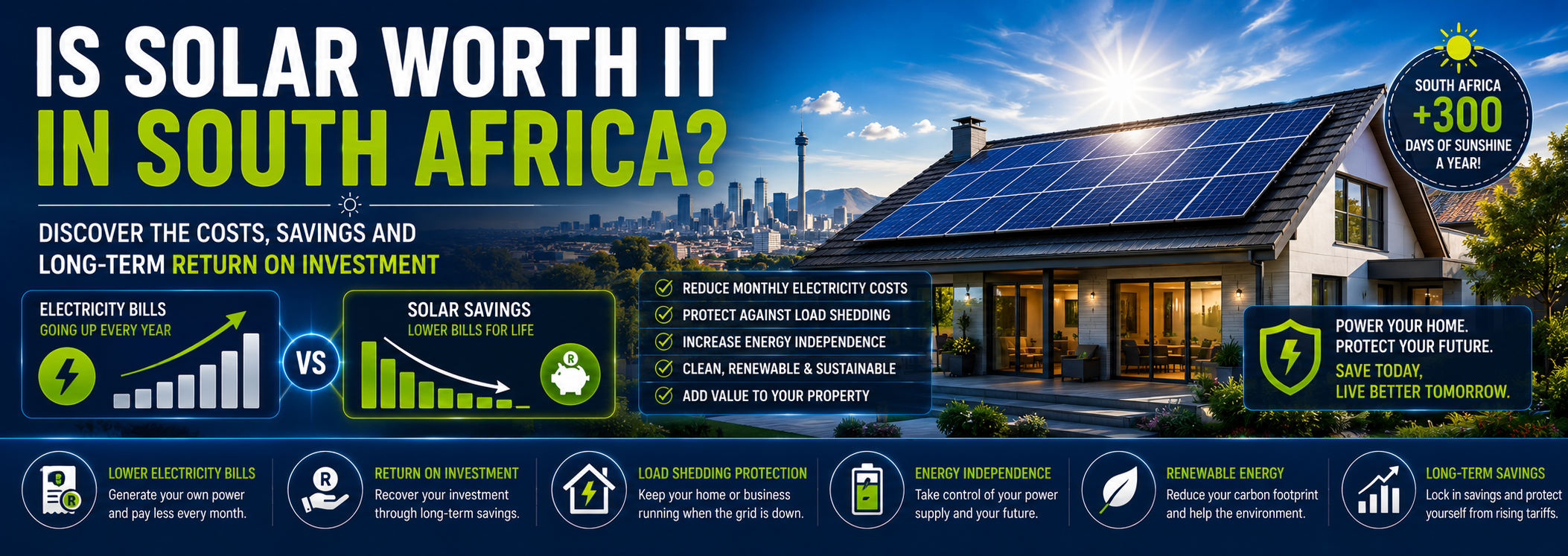
If you’re considering investing in renewable energy, you’ve probably asked yourself, “Is solar worth it in South Africa?” For many homeowners and businesses, the answer is yes. Rising electricity tariffs, frequent load shedding and the country’s excellent sunshine make solar one of the most practical long-term investments available.
Although installing a solar system requires an upfront investment, it can reduce monthly electricity costs, provide reliable backup power and protect you against future tariff increases.
Why Solar Makes Sense in South Africa
South Africa receives some of the highest levels of solar radiation in the world.
This natural advantage allows solar systems to generate significant amounts of electricity throughout the year.
In addition, many property owners choose solar because it offers:
- Lower monthly electricity bills
- Protection against load shedding
- Greater energy independence
- Reduced reliance on the national grid
- Cleaner, renewable energy
- Increased property value
These benefits continue long after the installation is complete.
Understanding the Costs
The cost of a solar installation depends on several factors.
These include:
- System size
- Number of solar panels
- Inverter type
- Battery capacity
- Installation complexity
- Roof design
- Electrical upgrades
A small residential system generally costs less than a large commercial installation, while hybrid systems with battery storage require a higher initial investment.
How Solar Saves Money
Every kilowatt-hour (kWh) generated by your solar panels reduces the amount of electricity you purchase from the grid.
As electricity prices continue to rise, these savings become even more valuable.
Furthermore, using stored battery power during peak tariff periods can reduce your electricity costs even further.
What Affects Your Return on Investment?
The payback period varies from one property to another.
Several factors influence how quickly your system pays for itself.
Electricity Consumption
Properties with higher daytime electricity usage often experience greater savings.
Solar System Size
A correctly sized system produces enough electricity without unnecessary overspending.
Battery Storage
Although batteries increase the initial investment, they provide backup power and improve energy independence.
Electricity Tariffs
As utility prices increase, the financial value of solar-generated electricity also grows.
Equipment Quality
High-quality panels, inverters and batteries often deliver better long-term performance and lower maintenance costs.
Additional Benefits Beyond Savings
Solar offers more than financial advantages.
Property owners also benefit from:
- Reliable power during outages
- Reduced carbon emissions
- Quiet operation
- Low maintenance
- Long equipment lifespan
- Greater energy security
These advantages make solar an attractive solution for both homes and businesses.
Is Solar Suitable for Businesses?
Yes.
Commercial properties often consume large amounts of electricity during daylight hours, which aligns well with solar energy production.
Businesses can benefit from:
- Lower operating costs
- Reduced exposure to tariff increases
- Improved business continuity
- Better energy management
- Enhanced environmental sustainability
For many companies, solar becomes a strategic investment rather than simply an energy upgrade.
Frequently Asked Questions
How long does it take to recover the cost of a solar system?
The payback period depends on system size, electricity usage and local tariffs. Many installations recover their cost over several years through electricity savings.
Will solar eliminate my electricity bill?
Not always. The outcome depends on your system size, energy consumption and whether you remain connected to the grid.
Does solar increase property value?
Many buyers view solar as an attractive feature because it can lower running costs and provide reliable backup power.
Can I expand my solar system later?
In many cases, yes. Expansion depends on the capacity of your inverter, battery system and available roof space.
Conclusion
If you’re asking, “Is solar worth it in South Africa?”, the long-term benefits make a compelling case. Lower electricity bills, greater energy independence and protection against rising utility costs have encouraged thousands of South Africans to invest in solar technology.
By choosing quality equipment and working with experienced installers, you can build a reliable system that delivers clean energy and long-term value for years to come.